
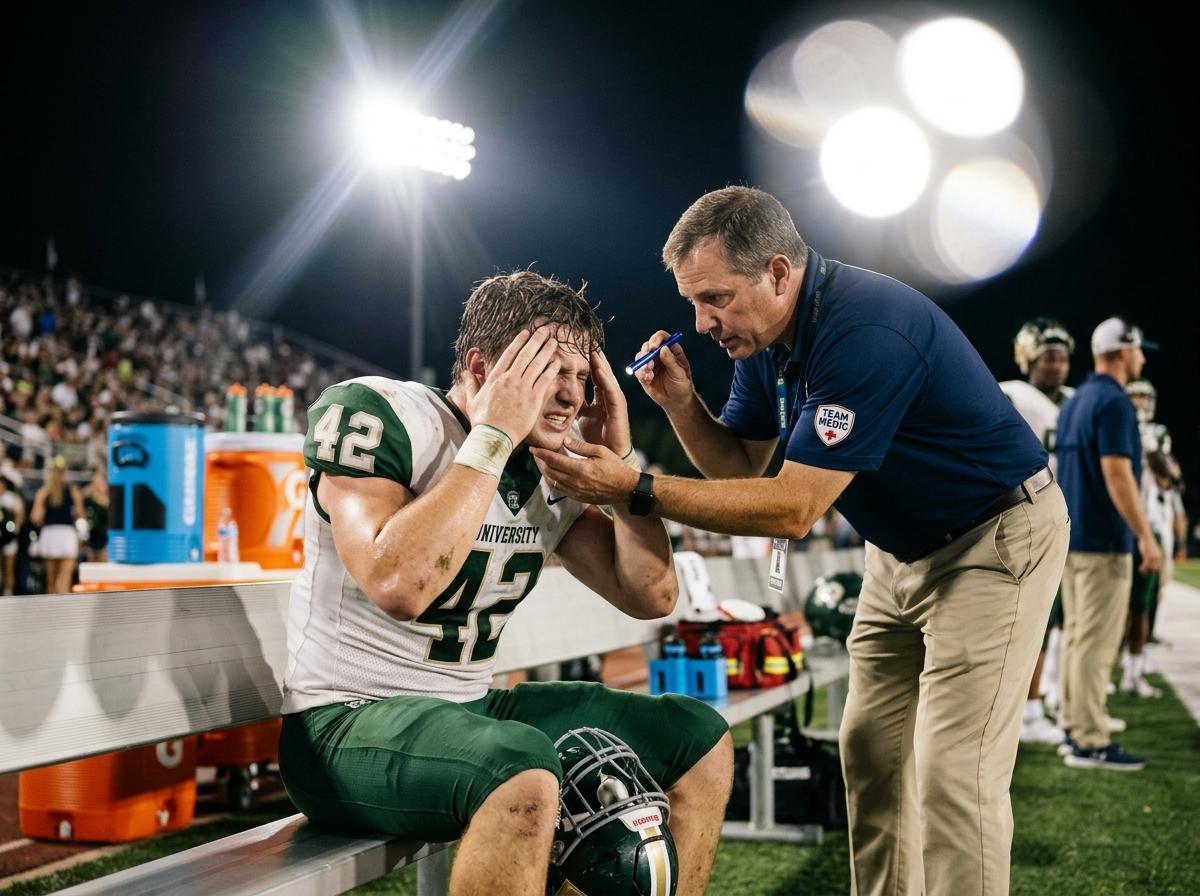
Concussions Aren’t Always Caused by a Direct Hit to the Head.
Many people assume a concussion only happens when an athlete strikes their head. In reality, a concussion can also occur from a hard hit to the body that causes the head and neck to move rapidly back and forth, similar to whiplash.
Whether it’s a collision on the football field, a fall during cheer practice, or player-to-player contact in soccer, any significant impact should be taken seriously.
Know the Signs and Symptoms
Concussion symptoms aren’t always immediate. In Fact, they may not appear until 24 to 72 hours after an injury, making it important to continue monitoring athletes even after they leave the field.
Common concussion symptoms include:
- Headache
- Dizziness or balance problems
- Nausea or vomiting
- Sensitivity to light or noise
- Blurred vision
- Confusion
- Difficulty concentrating
- Memory problems
- Feeling unusually tired
- Slurred speech
Some symptoms are more subtle. Athletes may say they:
- Feel “foggy”
- Don’t feel like themselves
- Feel unusually emotional or irritable
- Have difficulty thinking clearly
If an athlete experiences any of these symptoms after a hit, they should be removed from play immediately and evaluated by a healthcare professional.
What Should You Do If You Suspect a Concussion?
The old advice of complete bed rest has changed. While the brain still needs time to recover, research now shows that light, symptom-limited activity can actually support recovery.
After evaluation by a medical professional, many patients benefit from activities such as:
- Short walks
- Light stationary cycling
- Gentle daily movement, as tolerated
Returning to sports too soon can increase the risk of prolonged symptoms or another injury, so athletes should always follow a provider-guided return-to-play plan.
Can Concussions Be Prevented?
Unfortunately, no helmet or piece of equipment can completely prevent a concussion. However, athletes can reduce their risk by:
- Wearing properly fitted sport-specific protective equipment
- Learning proper tackling and playing techniques
- Following game rules designed to improve safety
- Reporting symptoms immediately instead of trying to “play through” an injury
When to Seek Care
If you think you or your child has suffered a concussion, don’t ignore the symptoms. Early evaluation and proper management can help ensure a safe recovery and a successful return to school, work, and sports.
At OrthoNC, our sports medicine specialists care for athletes of all ages and can evaluate concussion symptoms, guide recovery, and develop individualized return-to-play plans so athletes can safely get back to doing what they love.
Dr. John Neidecker


Dr. Paul Cohen
What Our Patients Are Saying