An ACL tear can quickly sideline you from sports, exercise, work, and everyday activities. If surgery is recommended, you may assume that traditional ACL reconstruction, replacing the torn ligament with a tendon graft, is your only option.
For certain ACL tears, however, there is another approach.
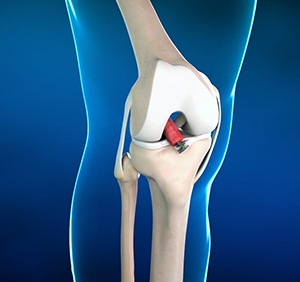
The BEAR (Bridge-Enhanced ACL Restoration) Implant is designed to help the body’s own ACL tissue heal, allowing appropriately selected patients to preserve their native ligament rather than replacing it with a graft.
At OrthoNC, our sports medicine specialists work with each patient to understand their injury, goals, and lifestyle before determining the best approach to ACL treatment.
What Is the BEAR Implant?
The BEAR Implant. is an FDA-cleared treatment for certain complete and partial ACL tears. Unlike traditional ACL reconstruction, which replaces the damaged ACL using a tendon graft, the BEAR procedure is designed to preserve and restore the patient’s own ACL.
During the procedure, the BEAR Implant is positioned between the torn ends of the ACL and combined with a small amount of the patient’s own blood. This creates an environment that supports the body’s natural healing process, allowing new tissue to form between the torn ends of the ligament.
Over time, the implant is resorbed by the body and replaced with the patient’s own cells, collagen, and blood vessels as the ACL continues to heal and remodel.
BEAR vs. ACL Reconstruction: What’s the Difference?
The primary difference between the BEAR procedure and traditional ACL reconstruction is repair versus replacement.
With ACL reconstruction, the damaged ligament is typically replaced using a tendon graft taken from the patient’s own body or donor tissue.
With the BEAR procedure, the goal is to preserve the patient’s native ACL and create an environment that allows the torn ligament to heal.
Because no tendon graft is needed for the BEAR procedure, patients also avoid the graft-harvesting portion of traditional ACL reconstruction when the patient’s own tendon would otherwise be used.
Both procedures involve surgery and require a structured rehabilitation program. The appropriate treatment depends on several factors, including the type of ACL tear, the condition of the remaining ligament, other injuries within the knee, and the patient’s individual goals.
Why Preserve the ACL?
Your ACL does more than provide stability to your knee. The native ligament contains nerves and other structures involved in the knee’s natural function and awareness of movement and position.
The BEAR procedure is designed to maintain the patient’s natural ACL anatomy by helping the torn ligament heal instead of replacing it.
For patients who are appropriate candidates, preserving the native ACL may be an important consideration when discussing surgical treatment options with an orthopaedic sports medicine specialist.
Who May Be a Candidate for the BEAR Procedure?
The BEAR Implant isn’t appropriate for every ACL injury.
It may be considered for patients with a complete or partial ACL tear confirmed by MRI who have sufficient healthy ACL tissue remaining to support the repair. The condition and location of the tear, along with other injuries in the knee, can influence whether BEAR is an appropriate option.
That’s why evaluation by an orthopaedic specialist is important. Your physician can review your MRI, examine your knee, discuss your activity goals, and determine whether BEAR, traditional ACL reconstruction, or another treatment approach is most appropriate for your injury.
What Does Recovery Look Like After the BEAR Procedure?
Healing an ACL takes time, regardless of the surgical approach.
Following the BEAR procedure, patients participate in a specific rehabilitation program designed to protect the healing ligament while gradually restoring range of motion, strength, stability, and function.
Your surgeon and physical therapist will guide your progression based on how your knee is healing. Returning to running, cutting, pivoting, and sports should occur only when appropriate recovery milestones have been reached and your care team determines that your knee is ready.
Choosing the Right Treatment for Your ACL Tear
No two ACL injuries, or patients, are exactly alike.
Your age, activity level, athletic goals, type of ACL tear, condition of the remaining ligament, and other injuries within the knee can all play a role in determining the best treatment plan.
For appropriately selected patients, the BEAR implant provides an approach to ACL surgery focused on preserving and healing the native ligament rather than replacing it with a graft.
The first step is understanding your injury and all of the treatment options available to you.
Have You Been Diagnosed With an ACL Tear?
Whether your ACL injury happened on the field, at the gym, or during an everyday activity, the sports medicine specialists at OrthoNC can help you understand your diagnosis and determine the right path forward.
If you’ve been diagnosed with an ACL tear, or think you may have injured your ACL, schedule an evaluation with an OrthoNC sports medicine specialist to discuss your treatment options and whether the BEAR Implant may be appropriate for you.
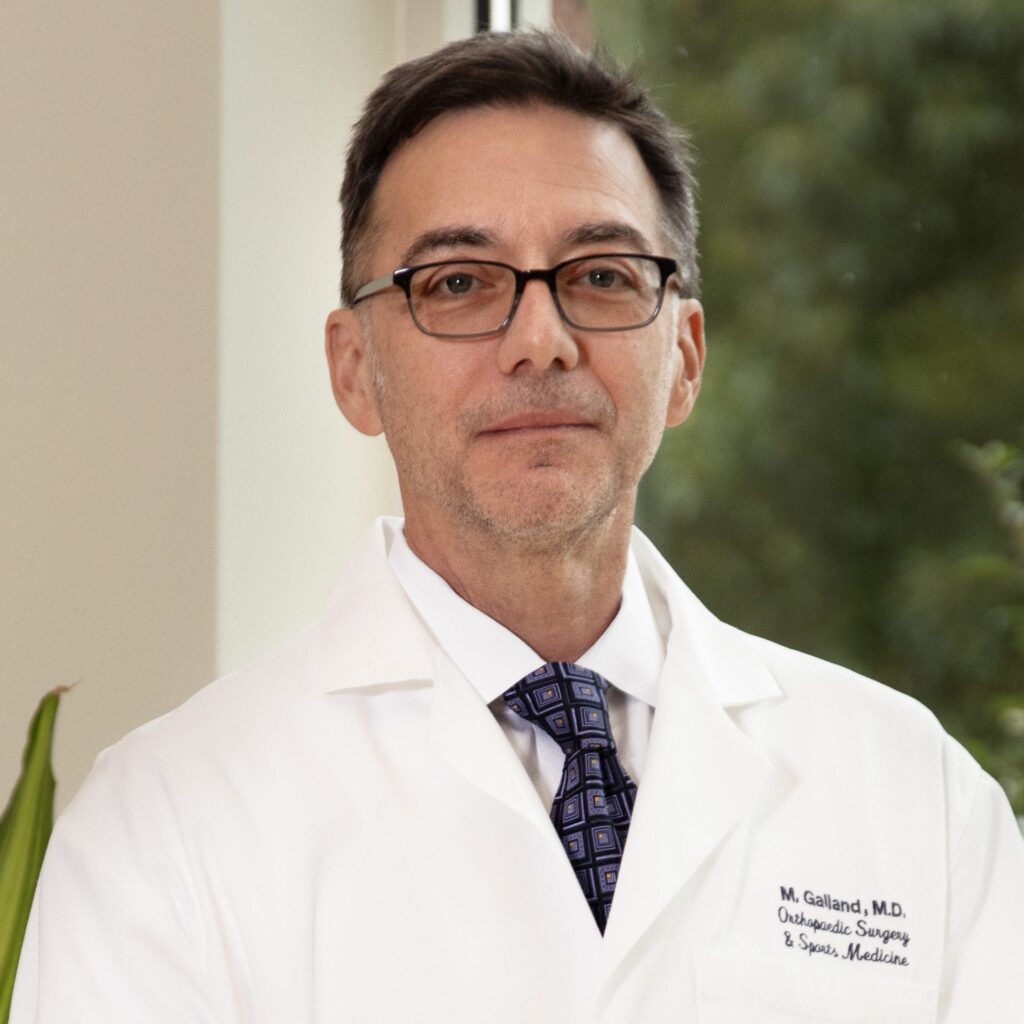
Meet our BEAR Surgeon
Dr. Mark Galland
What Our Patients Are Saying